Product development with Claude AI, lessons learned

Posted on Leave a commentPosted in Business, business advice, Hiring Consultants, Marketing, Outsourcing IT

For the past five years I have been an angle investor and Board observer to a startup company.  The company has been doing well developing and marketing its B2B services.  However, I’ve been advocating for a B2C product, as well.  After several conversations with the Board and founders, I offered to take the lead on developing the B2C site as a sort of skunk-works operation, thereby allowing the founders and the company to stay on task while we explored this opportunity.  In short, I’ve taken on the role of acting Product Manager for a new product line.  This will be the first of my posts on the project.

In order to minimize impact on the company’s day-to-day operations, my plan was to gather specifications and hire outside developers to build an MVP site, launch it, drive traffic to it and see if it proved my thesis right.  If you are a follower of my site and show, you’ll know that I have a background of over 25 years of software development experience on large-scale enterprise projects, as well as experience being the COO of several successful B2C companies (and a few not so successful, too).  I’ve learned that you need to get something out to market quickly, see if it gets traction, and use the data to determine whether to keep it going or kill the project.
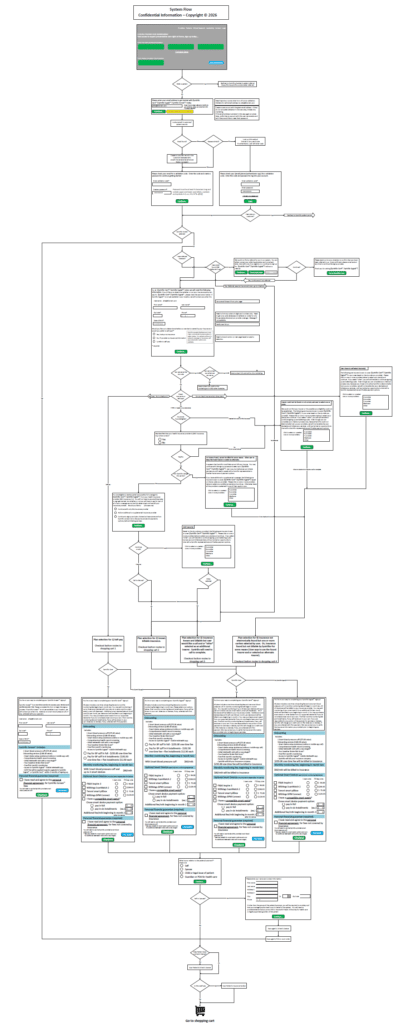
Flow Chart Visio document uploaded to Claude

So, I set out to develop specifications that I could hand off to a couple developers to get a quote for building an MVP site.  To do so, I created a detailed Visio diagram showing the entire logical process flow (sorry, the attached figure is low-res to maintain confidentiality).  Along the way I had to create documents to explain the Visio diagram and produce the ancillary text, define lookup tables, determine what elements we’d build from scratch and decide what services we would offload to 3rd party vendors via APIs (i.e. credit card processing, sales tax processing, persistent storage, analytics, A/B testing, etc.).  As I got to the point of seeking bids, I thought to myself, I wonder if an AI tool might be able to build the site for me?  I’ve heard good things about Claude, so I thought, let’s give it a try…

Read more...

Using improvisation and comedy to unleash your company’s message and branding

Posted on Leave a commentPosted in Advertising, business advice, free business advice, Hiring Consultants, Hiring Contractors, Marketing, Priorities

When Hewlett-Packard was about to launch their Windows 10 line of notebook and desktop computers they were scared. Not because they were worried about competition or the quality of their devices but, because of the horrible reaction to their prior line of computers due to Microsoft’s shockingly bad Windows 8 software. In order to create the right marketing message for their new line of computers they knew they needed serious help. This was no laughing matter. So, who did they turn to? A bunch of comedians.

HP turned to a San Francisco based creative agency called Funworks. Funworks brought in a team of comedians skilled at improvisation techniques to hold a “fun workshop” with HP’s top product managers. Founded by Paul Charney, a veteran creative agency executive and founder of the San Francisco comedy troupe Killing Lobsters, Paul and his team help companies express their issues and discover their most compelling messaging points by fostering an environment of open conversation based on improvisation techniques where ideas flow freely when everyone simply says “yes” and “and”.

In this episode of Bay Area Ventures I speak with Paul Charney and Funwork’s Creative Architect, Erica Fortescue about his company and their award winning commercials.

Funworks”

Paul   Erica 

We discuss the psychology of what makes a company and its products memorable and why humor is sometimes the best medicine, even when trying to convey a serious message. We learn what a fun workshop is and what takes place at one.

Paul talks about why he started Funworks and how it is different from other creative ad agencies. He talks about the challenges of moving from a practicing creative person and comedian to being the CEO of a team of other practitioners. What are the trade off and what are the rewards for being a leader.

Erica shares her knowledge on the neuropsychology of messaging and how humor can be used to convey a serious message while maintaining the prestige and authority of the company being represented in the creative message.

Of course we also hear Paul and Erica share their view on the Bay Area Way of business. In their practice they have dealt with startup to Fortune 50 enterprises in the Bay Area and across the US. In the Bay Area, in particular, they talk about how companies staffed by 20 to 30 “something” employees are sometimes more difficult to help because they just don’t understand their true identity as an organization. Often in these cases they are called in by the company’s Board of Directors to help figure it out and craft the right message and persona for the firm.

This episode was recorded on May 22, 2017 on Bay Area Ventures on SiriusXM Channel 111 Business Radio Powered by the Wharton School. For a list of upcoming and past guest information click on the Show link above.

Hiring Contractors – Part 1

Posted on Leave a commentPosted in COO, Hiring Consultants, Hiring Contractors, HR

Independent Contractors or Independent Consultants are people who do work for your company who are not employees, corporations or LLCs. Hiring independent contractors is attractive to startups because it allows them to quickly bring on talent without the headache of setting up payroll and benefits. Independent contractors also make it easy to bring people onboard for as long or as little as needed without worrying about employment laws that apply to hiring and discharging of regular employees. Without the added expense of benefits, matching FICA payments, and perhaps even office space and equipment, independent contractors can offer real savings and cash flow benefits to a startup organization.

But there are some legal pitfalls to hiring independent contractors that most startups (and many established companies for that matter) don’t understand. This post is the first of a three part series that helps to explain some of those potential pitfalls, so that you can make an informed decision before hiring an independent contractor. Read more…